 Acupuncture Times Your guide to acupuncture, Chinese herbal medicine and TCM — explore acupoints, herbs and formulas, plus the latest acupuncture research news.
Related Articles

‘Acupuncture’ is not a single technique but a family of related approaches that have developed over more than two thousand years and across many cultures. While all involve stimulating specific points on the body – most often with fine needles – the underlying theory, needling technique and areas treated can differ considerably. Here are thirteen of the most widely practised styles.
1. Traditional Chinese acupuncture (TCM)
The most widely practised style worldwide. Based on the theory of qi, yin and yang, the five elements and the channel system, the practitioner makes a pattern diagnosis (using tongue and pulse) and selects points along the meridians to restore balance. Needles are usually stimulated to obtain de qi (a characteristic dull, heavy sensation).
2. Five Element acupuncture
A style that gives particular weight to the emotional, mental and constitutional aspects of health. The practitioner identifies a person’s underlying ‘causative factor’ among the five elements and treats to support that element, addressing body, mind and spirit together.
3. Japanese acupuncture
Japanese styles (such as Meridian Therapy and Toyohari) are known for their gentleness: very fine needles, shallow insertion, minimal sensation and a strong emphasis on abdominal (hara) and pulse palpation. Moxibustion is used extensively.
4. Korean hand acupuncture (Koryo)
A micro-system in which the whole body is mapped onto the hands. Very fine needles or pressure are applied to corresponding points on the hands to treat conditions throughout the body – useful where body needling is impractical.
5. Auricular (ear) acupuncture
Another micro-system, mapping the whole body onto the ear. Tiny needles, seeds or studs are placed on ear points. It is widely used for pain, stress, and addiction and smoking-cessation support.
6. Scalp acupuncture
Needles are inserted into defined zones of the scalp that correspond to areas of the brain and body. It is used particularly in the rehabilitation of neurological conditions such as the after-effects of stroke.
7. Electroacupuncture
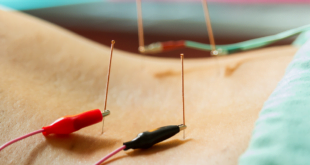
A gentle electrical current is passed between pairs of inserted needles to provide continuous, measurable stimulation. It is especially popular for pain and musculoskeletal conditions. (See our dedicated electroacupuncture article.)
8. Master Tung’s acupuncture
A distinctive family lineage using its own set of points (many away from the site of pain) and few needles per treatment. It is valued for often producing rapid results, particularly for pain.
9. Balance Method (Dr Tan)
A modern system built on channel relationships and the principle of treating the opposite side or limb (‘imaging’) to bring fast relief, especially for painful conditions, while the affected area is moved.
10. Trigger point acupuncture / dry needling
A Western, biomedical approach in which needles are inserted into myofascial ‘trigger points’ (taut knots in muscle) to release them and relieve pain. (See our dry needling article for how this differs from traditional acupuncture.)
11. Cosmetic / facial acupuncture
Fine needles are placed in the face (and body) to support skin tone and a fresh appearance, working alongside a constitutional treatment. It is increasingly popular as a natural approach to facial rejuvenation.
12. Battlefield / NADA ear protocols
Standardised auricular protocols – Battlefield Acupuncture for acute pain and the NADA five-point protocol for stress, trauma and addiction – designed to be simple, rapid and easily delivered in groups or field settings.
13. Veterinary acupuncture
Acupuncture adapted for animals, used by trained veterinary practitioners for pain, musculoskeletal and other conditions in horses, dogs, cats and other species.
Which style is right for you?
No single style is ‘best’ – the right choice depends on your condition, your preferences and, above all, the skill and experience of the individual practitioner. Many acupuncturists blend several approaches. If you are considering treatment, choose a qualified, registered practitioner and discuss which approach they feel suits your needs.
This article is for general information only and is not a substitute for professional medical advice. Always consult a qualified, registered practitioner.